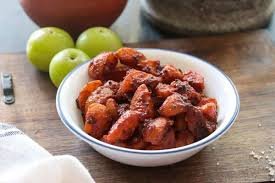

Amla Pickle Recipe is one of the most flavourful and nutritious traditional pickles enjoyed across India. Made from fresh, seasonal Indian gooseberries, this pickle combines the perfect balance of tanginess, spice, and natural bitterness that transforms beautifully when cooked with aromatic Indian masalas. Amla is widely celebrated for its incredibly high Vitamin C content, immunity-boosting antioxidants, and digestive benefits. By turning this superfood into a pickle, you not only preserve its goodness for months but also add a vibrant side dish to your everyday meals.
This amla pickle is simple to prepare, requires just a handful of ingredients, and has a strong, rich flavour that pairs wonderfully with roti, paratha, rice, khichdi, curd rice, or even simple dal-chawal. Unlike store-bought pickles filled with vinegar and preservatives, this homemade version uses mustard oil and natural spices, making it healthier, fresher, and more aromatic. Whether you are a beginner or an experienced home cook, this detailed recipe will help you make a long-lasting batch of spicy gooseberry achar that your family will love.
🥣 Ingredients
-
500 g amla (Indian gooseberry)
-
3–4 tbsp mustard oil
-
1 tsp mustard seeds
-
1 tsp fenugreek seeds
-
1 tsp fennel seeds
-
1 tsp turmeric powder
-
1½ tsp red chilli powder
-
1 tsp salt (adjust to taste)
-
1 tsp asafoetida (hing)
-
1 tbsp lemon juice (optional)
👩🍳 Amla Pickle Recipe – Step-by-Step Method
1. Prepare the Amla
Wash the amlas thoroughly and boil them for 3–4 minutes until they turn slightly soft. This helps separate the segments easily. After boiling, drain the water and allow them to cool. Gently press each amla, and the segments will open naturally, releasing the seed from the centre.
2. Heat the Mustard Oil
Mustard oil gives authentic flavour to any Indian pickle. Heat it in a kadai until it reaches its smoking point. Then switch off the flame and allow the oil to cool slightly. This step removes the raw smell and enhances aroma.
3. Add Spices for Tempering
When the oil cools a bit, add mustard seeds, fenugreek seeds, fennel seeds, and asafoetida (hing). Let them crackle and infuse their flavours into the oil. This tempering forms the foundation of your pickle’s taste.
4. Mix the Spices with Amla
Add turmeric powder and red chilli powder and mix quickly to prevent burning. Now add the boiled amla pieces and salt. Toss well so that each segment gets evenly coated with spices and oil.
5. Cook for a Few Minutes
Cook the mixture on low flame for 2–3 minutes to allow the spices to blend into the amla. Do not overcook, as the amlas should retain their firm texture for a good pickle.
6. Add Lemon Juice (Optional)
Lemon juice enhances tanginess and works as a natural preservative. This step is optional but recommended for longer shelf life.
7. Store the Pickle
Let the pickle cool completely. Transfer it into a clean, dry, sterilised glass jar. Keep it in sunlight for 1–2 days to deepen flavour. Properly stored, the pickle stays fresh for weeks.
🍽 Serving Suggestions
Amla pickle pairs wonderfully with:
-
Roti, paratha, or puri
-
Dal-chawal or khichdi
-
Curd rice or lemon rice
-
Stuffed parathas
-
Tiffin and lunchbox meals
-
Millet khichdi or poha
🌿 Health Benefits of Amla Pickle
Even in pickle form, amla retains many of its nutritional benefits. It is rich in:
-
Vitamin C for immunity
-
Antioxidants for skin & hair health
-
Digestive properties that promote gut health
-
Natural anti-inflammatory compounds
-
Iron and minerals essential for metabolism
Because this pickle uses mustard oil and minimal preservatives, it is healthier than most commercial pickles.
💡 Useful Tips for Perfect Amla Pickle
-
Always ensure the jar and spoon are moisture-free.
-
Increase mustard oil if you want longer shelf life.
-
Adjust chilli powder according to spice tolerance.
-
Add kalonji or coriander powder for flavour variations.
-
Store in sunlight for 1–2 days for deeper colour and taste.
🖼 Feature Image Prompt
“High-resolution close-up of a bowl filled with glossy amla pickle coated in mustard oil, Indian spices scattered around, rustic wooden background, vibrant colours, top-down food photography.”